Apple has unveiled an all-new iPad mini, and this is much more than a routine chip refresh. The compact tablet now has a larger 8.5-inch OLED display, an A20 Pro chip, a substantially thinner and lighter enclosure, and the first IP67 water- and dust-resistance rating on an iPad. Preorders open Wednesday, October 28, with availability beginning Friday, November 6.
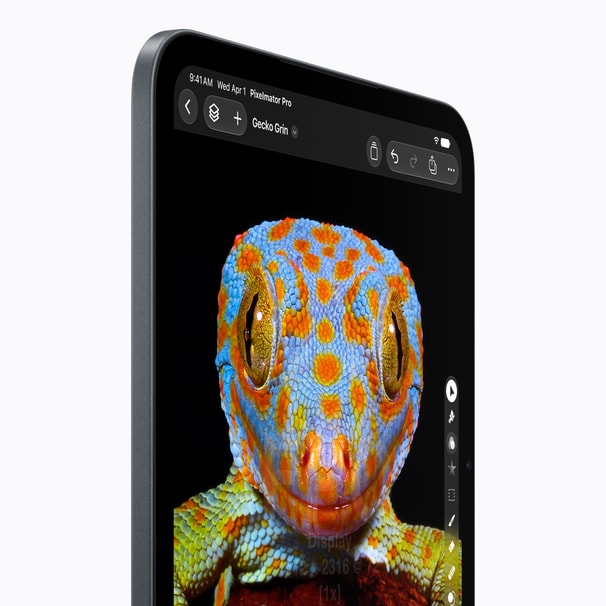
The overhaul makes the new iPad mini one of Apple’s most interesting mobile devices this fall, but a higher $699 starting price and meaningful differences between storage tiers mean buyers should look closely before ordering. Here is what changed, what did not, and which configuration makes the most sense.
OLED is the headline upgrade
According to Apple’s announcement, the display grows from 8.3 inches to 8.5 inches while the bezels become thinner. The new OLED panel offers a 2,000,000:1 contrast ratio, 600 nits of full-screen brightness, and up to 1,200 nits of peak brightness for HDR content. OLED’s individually lit pixels should produce deeper blacks and stronger contrast than the LCD panel in the previous model.
Apple also offers nano-texture glass for the first time on an iPad mini. It is a $100 option, and Apple limits it to the 256GB and 512GB models. Nano-texture can reduce glare in bright rooms and outdoor workspaces, but most buyers will be better served by the standard glossy glass, which preserves punchier contrast and costs less.
One caveat: Apple’s technical specifications do not list ProMotion or advertise a 120Hz adaptive refresh rate for this model. Apple highlights the OLED panel’s contrast and brightness, but buyers seeking the fluid motion of an iPad Pro should note that omission.
A thinner body that can handle water
The Wi-Fi model measures just 5.4mm thick and weighs 255 grams, down from 6.3mm and 297 grams for the prior generation. Those numbers make an already portable tablet easier to hold for reading, gaming, field work, or note-taking.
More importantly, the new iPad mini carries an IP67 rating. Apple says it was tested under controlled conditions for submersion in up to one meter of fresh water for as long as 30 minutes. That is protection against accidents, not permission to use it underwater: resistance can decline with wear, and Apple says liquid damage is not covered by the standard warranty.
Apple also redesigned the audio system. An “Acoustic Display” couples specially designed woofers through the screen and hides tweeters between the glass and aluminum enclosure, eliminating exposed speaker holes while helping seal the device.
The A20 Pro has a storage-tier surprise
Every model uses Apple’s A20 Pro and includes a seven-core GPU, hardware-accelerated ray tracing, and Neural Accelerators. However, Apple’s technical specifications show that the processor configuration is not identical across the lineup. The 128GB and 256GB models have a five-core CPU and one 16-core Neural Engine, while the 512GB version gets a six-core CPU and a Dual 16-core Neural Engine.
That does not automatically make the 512GB model the best value. For reading, streaming, web browsing, and handwritten notes, the lower-capacity versions should already be extremely fast. The upgraded 512GB configuration is more compelling for demanding games, creative apps, local AI workloads, or anyone who genuinely needs the extra storage.
Cameras, connectivity, and charging
The 12-megapixel Center Stage camera finally moves to the landscape edge, a welcome change for video calls. On the back is a 12-megapixel wide camera capable of 4K video at up to 60 frames per second. Apple’s N1 networking chip adds Wi-Fi 7, Bluetooth 6, and Thread, while cellular models use Apple’s C2 modem with 5G and eSIM support.
Battery life remains rated for up to 10 hours of web browsing over Wi-Fi or video playback. Fast charging can reach roughly 50 percent in around 30 minutes with a 35W-or-higher USB-C adapter, though Apple includes a 20W adapter in the box. Apple Pencil Pro and Apple Pencil (USB-C) are supported; accessories are sold separately.
Price, colors, and the buying takeaway
The new iPad mini comes in Midnight and Starlight with 128GB, 256GB, or 512GB of storage. U.S. pricing starts at $699 for Wi-Fi and $849 for Wi-Fi + Cellular. Education pricing begins at $649. That is a premium price for a small tablet, especially without ProMotion.
For most people, the 128GB Wi-Fi model is the sensible starting point if compact size, OLED contrast, and water resistance are the priorities. Choose 256GB if you keep many games, downloads, or creative files locally; add nano-texture only if glare is a persistent problem. Consider 512GB when both storage and the stronger A20 Pro configuration will matter to your actual workflow.
Existing A17 Pro iPad mini owners do not need to rush unless the OLED screen, lighter design, or IP67 rating solves a specific need. Owners of older minis get a much more substantial upgrade: a brighter modern display, dramatically faster hardware, current Apple Intelligence support, better video-call placement, faster wireless networking, and a body built for life beyond the desk.
Leave a Reply