Apple has opened a large U.S. research study focused on a question that is becoming harder to ignore: when people ask artificial intelligence about their health, what makes the answer useful, understandable, and trustworthy?
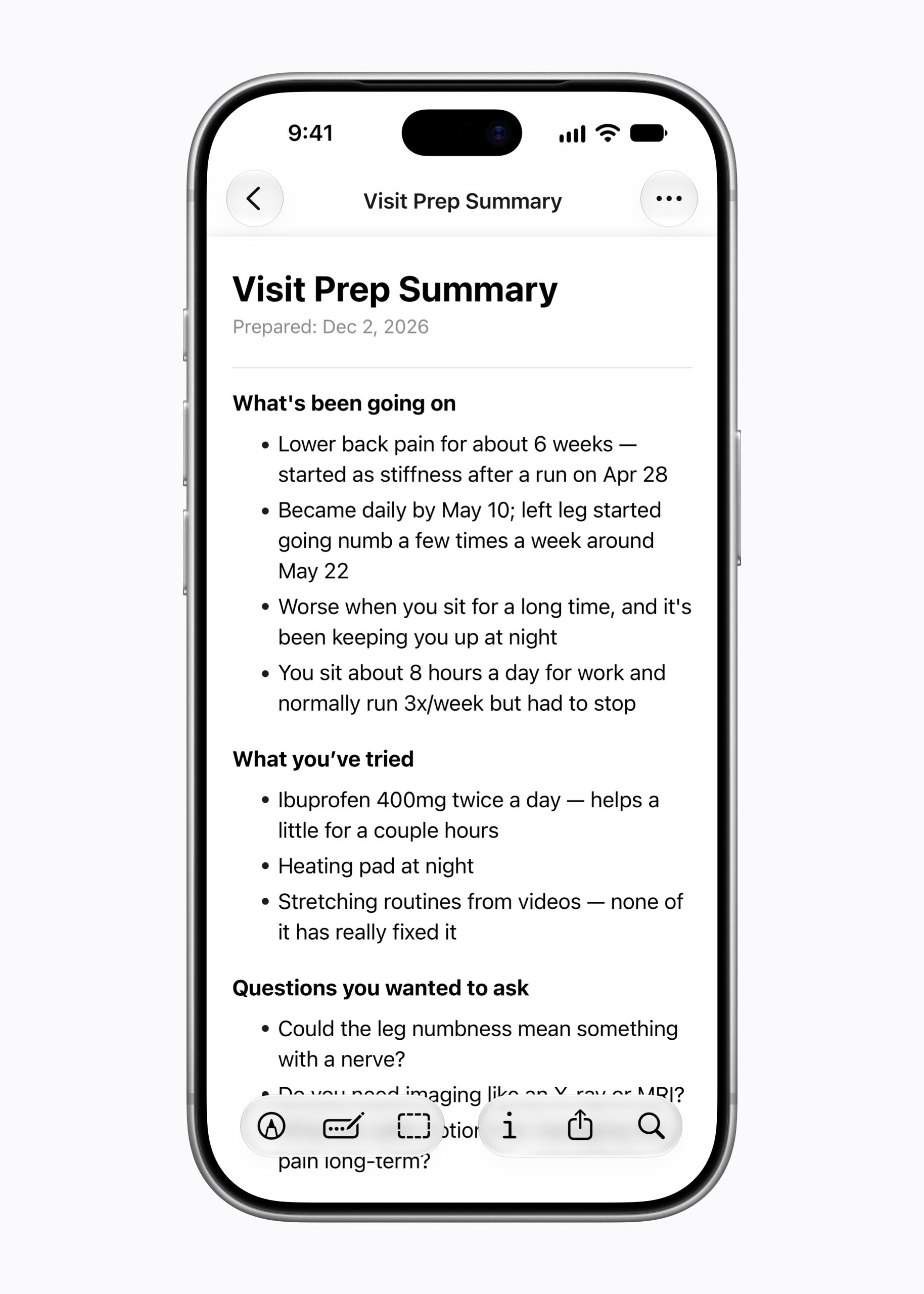
The new Apple Health AI Usage Study, announced November 15, is a virtual study conducted with clinical AI company OpenEvidence. It is open to as many as 200,000 eligible adults and uses a dedicated iPhone app. This is research—not a rollout of an AI doctor inside the Health app—and Apple says the app is not designed to diagnose or treat a condition.
For iPhone owners curious about health AI, the study offers a controlled way to try conversational tools while helping researchers learn where those tools succeed, confuse people, or need stronger guardrails.
What participants will actually do
Inside the study app, participants can ask everyday health questions and explore more complicated medical information in approachable language. Answers include links to peer-reviewed clinical citations. OpenEvidence says its system draws from established medical publications, while Apple designed the research experience around it.
The study is not only measuring whether an answer sounds good. Apple says researchers will examine trust, response quality, comprehension, and whether an interaction affects everyday health actions. Another goal is to learn whether an AI tool can help someone prepare more effectively for a visit with their doctor—for example, by organizing questions or making unfamiliar terms easier to discuss.
Participants may also choose to share selected HealthKit data types, including resting heart rate, activity, sleep, or lab results. That part is optional. Researchers want to understand whether adding personal context makes an answer feel more relevant or easier to understand, and where personalization may introduce new risks.
Apple is testing trust, not just accuracy
Health questions are unusually sensitive because a polished but incomplete answer can still lead someone in the wrong direction. Large language models may produce information that is unclear, missing context, or too confident. Apple’s study is notable because it looks beyond a simple accuracy score and asks how real people interpret an answer and what they do next.
That distinction matters. A response can cite credible research yet still be poorly matched to a person’s situation. It can also be technically accurate but hard to understand. By studying comprehension and behavior alongside answer quality, Apple and OpenEvidence may gather more useful evidence about how consumer health AI should be designed.
Privacy controls and safety guardrails
According to Apple, study data will not be used to train AI models. Participants decide whether to share HealthKit metrics and survey responses, and Apple says it has security measures intended to protect the study data it maintains and preserve participant confidentiality.
The app also includes guardrails intended to recognize certain concerning questions and direct a participant toward a medical provider or other resources. Those protections do not turn the app into emergency care. Anyone facing urgent symptoms should contact emergency services, while personal diagnosis and treatment decisions should remain with a qualified clinician.
Before enrolling, read the consent screens carefully. Check which data categories you are being asked to share, choose only what you are comfortable contributing, and remember that permission choices can carry different implications in a research setting than in an ordinary wellness app.
Who can join the Apple Health AI Usage Study?
Apple says enrollment is available in the United States to eligible adults age 21 and older. You need an Apple Intelligence-capable iPhone—an iPhone 15 Pro or newer—running iOS 26 or later. The study can accept up to 200,000 participants.
The dedicated Apple Health AI Study app is available on the App Store. Downloading the app does not obligate you to participate; it provides more information about eligibility and the enrollment process before you decide.
Should you enroll?
This study may appeal to people who already use AI to decode medical terminology, prepare questions for appointments, or better understand health information. It may also be worthwhile for participants who want stronger evidence and clearer safeguards before conversational health tools become more common.
Still, approach the app as a research tool. Verify important information with your doctor, do not delay care because of an AI response, and avoid treating a cited answer as a personalized diagnosis. The most useful contribution may be honest feedback when an answer is confusing or fails to address the question.
Apple is not promising a consumer health chatbot from this work. What it is doing is collecting evidence about how people engage with one. That careful distinction—and the focus on trust, comprehension, privacy, and clinical follow-up—makes this study more consequential than another AI feature announcement.
Leave a Reply